HOW TO: Spy on the Webcams of Your Website Visitors
October 18th, 2011 | 54,916 views | 100 Comments » | TweetI discovered a vulnerability in Adobe Flash that allows any website to turn on your webcam and microphone without your knowledge or consent to spy on you.
It works in all versions of Adobe Flash that I tested. I’ve confirmed that it works in the Firefox and Safari for Mac browsers. Use one of those if you check out the live demo. There’s a weird CSS opacity bug in most other browsers (Chrome for Mac and most browsers on Windows/Linux).
Video demo of the attack:
Source code: Github
Update 10/19/2011: CNET says that Adobe is working on a fix and it could be ready by end of week. Adobe also emailed me and said “our product team is wrapping up their investigation and is now working on a fix, which should not require a Flash Player update”.
Update 10/20/2011: Whoa, this story is everywhere!
- CNET
- Wired.com
- The Register
- Ars Technica
- Gizmodo
- PC World
- Yahoo! News
- ZDNet (and another)
- The Inquirer
- Computer World
- The H Security
- An interesting opinion piece: “The Sins of the Flash”
Update 10/20/2011: Adobe says they just posted a fix to the Settings Manager that should resolve the issue. I just tested it out, and indeed the issue appears to be fixed now. Congrats, Adobe, for the quick fix!
Update 12/21/2011: This attack made it into Jeremiah Grossman’s list of top web hacking techniques of 2011. It’s #26.
Update 1/10/2012: Another similar clickjacking attack was just discovered and fixed by Adobe.
Clickjacking + Adobe Flash = Sad Times!
This attack works by using a neat variation of the normal clickjacking technique that spammers and other bad people are using in the wild right now. For the uninitiated:
Clickjacking is a malicious technique of tricking Web users into revealing confidential information or taking control of their computer while clicking on seemingly innocuous web pages.
— Wikipedia
Combine clickjacking with the Adobe Flash Player Setting Manager page and you have a recipe for some sad times.
Background
I took a computer security class (Stanford’s CS 155) last quarter and really enjoyed this research paper on framebusting and clickjacking. After reading it, I checked out a few popular sites to see if it was possible to clickjack them. After a couple hours, I had no success.
But, then I stumbled upon this blog post entitled “Malicious camera spying using ClickJacking” where the author shows how to clickjack the Adobe Flash Settings Manager page to enable users’ webcams. He accomplishes this by putting the whole settings page into an iframe and making it invisible. Then, unsuspecting users play a little game and unwittingly enable their webcams. Adobe quickly added framebusting code to the Settings Manager page (why wasn’t it there in the first place?), and the attack stopped working.
But alas, the same attack is actually still possible.
How my attack works
Instead of iframing the whole settings page (which contains the framebusting code), I just iframe the settings SWF file. This let me bypass the framebusting JavaScript code, since we don’t load the whole page — just the remote .SWF file. I was really surprised to find out that this actually works!
I’ve seen a bunch of clickjacking attacks in the wild, but I’ve never seen any attacks where the attacker iframes a SWF file from a remote domain to clickjack it — let alone a .SWF file as important as one that controls access to your webcam and mic!
The problem here is the Flash Player Setting Manager, this inheritance from Macromedia might be the Flash Player security Achilles heel.
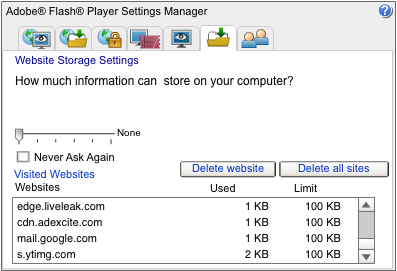
This is a screenshot of what the Settings Manager .SWF file looks like:
Live Demo
I built a quick proof-of-concept demo to show how it works.
Important: The demo is only guaranteed to work in Firefox and Safari for Mac. Right now, it doesn’t work in most other browsers since you can’t change the opacity or the z-index of an iframed swf file. However, I discovered a workaround that involves multiple iframes, but haven’t implemented it yet since it’s a bit complicated. But, I’m pretty sure that it’s possible to make it work everywhere, given enough time.
View the Demo.
The code is also available on Github.
I should also mention that my demo builds heavily off of the ideas and work done by the dude who runs this blog, Guy Aharonovsky.
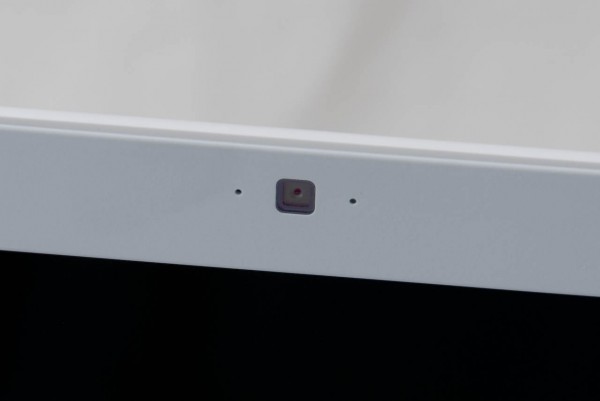
Also: If you’re a bit leery about running the demo… I promise I’m not saving the webcam video. I just display it back to you so you can see that it works. However, if an attacker used this technique, they would almost certainly NOT show you any sign that your cam is on. You’re only hope of finding out that something’s up is your webcam indicator light (if you have one).
Why release this?
I reported this vulnerability to Adobe a few weeks ago through the Stanford Security Lab. It’s been a few weeks and I haven’t heard anything from Adobe yet. I think it’s worth sharing it with the world now, so that Adobe pays attention and fixes it more quickly.
Although every browser and OS is theoretically susceptible to this attack, the process to activate the webcam requires multiple highly targeted clicks, which is difficult for an attacker to pull off. I’m not sure how useful this technique would actually be in the wild, but I hope that Adobe fixes it soon so we don’t have to find out.
Further reading
If you want to learn more about clickjacking and framebusting, you should read the excellent Busting Frame Busting: a Study of Clickjacking Vulnerabilities on Popular Sites (PDF) paper by Gustav Rydstedt, Elie Bursztein, Dan Boneh, and Collin Jackson.


Using this on Firefox (with NOScript) with Ubuntu Linux gives a clickjack warning.
It is unusable in Chrome for Ubuntu Linux.
old news, bud….
[...] more at Feross.org and see it in action using a (safe) live [...]
[...] (Credit: Feross Aboukhadijeh) [...]
[...] (Credit: Feross Aboukhadijeh) [...]
[...] (Credit: Feross Aboukhadijeh) [...]
[...] (Credit: Feross Aboukhadijeh) [...]
[...] (Credit: Feross Aboukhadijeh) [...]
[...] was brought to light by Feross Aboukhadijeh, a Stanford University computer science student, in a blog post yesterday that includes a live demo. The attack uses a technique that has become popular on sites [...]
It doesn’t work on Opera (11.51), good browser
.
[...] lukę wykrył i opisał w swoim blogu Feross Aboukhadijeh, student informatyki na Uniwersytecie Stanforda – Aboukhadijeh [...]
[...] : Feross Aboukhadijeh et CNet] [...]
[...] issue was discovered by a Stanford University computer science student named Feross Aboukhadijeh who based his [...]
[...] issue was discovered by a Stanford University computer science student named Feross Aboukhadijeh who based his [...]
[...] came to light when Feross Aboukhadijeh, a student at Stanford University, announced this bug in a post including a demo. In order to exploit the flaw, attackers use a technique called “Clickjacking” that has [...]
[...] unwittingly change their Flash player settings using a Shockwave Flash file hosted by Adobe itself. Re-discovered by Stanford computer science student Feross Aboukhadijeh, the attack works by loading Adobe’s own Flash Player Settings Manager directly from Adobe, [...]
[...] emanate was discovered by a Stanford University mechanism scholarship tyro named Feross Aboukhadijeh who formed his [...]
does this hack trigger the webcam light?
[...] Stanford computer science student named Feross Aboukhadijeh has uncovered a pretty major security hole [...]
[...] Stanford computer science student named Feross Aboukhadijeh has uncovered a pretty major security hole in Adobe Flash, in which somebody could turn on your [...]
[...] (Credit: Feross Aboukhadijeh) [...]
Very dangerous !!!
ADobe should fix it !!!
Thanks
Best regards
[...] of webcam spying without their knowledge. A computer science student at Stanford University, Feross Aboukhadijeh, discovered the [...]
[...] and microphone to spy on you. Stanford University computer science student Feross Aboukhadijeh discovered the flaw, which is found in every version of Flash and can be exploited in Safari and Firefox on Mac OS X [...]
[...] have really outdone themselves this month. A fix should be ready by the end of this week. Link: http://www.feross.org/webcam-spy/ Adobe, no longer content with its software having normal vulnerabilities, decided it is cool [...]
[...] Stanford computer science student named Feross Aboukhadijeh has uncovered a pretty major security hole in Adobe Flash, in which somebody could turn on your [...]
[...] Stanford computer science student named Feross Aboukhadijeh has uncovered a pretty major security hole in Adobe Flash, in which somebody could turn on your [...]
[...] “I’ve seen a bunch of clickjacking attacks in the wild, but I’ve never seen any attacks where the attacker iframes a SWF file from a remote domain to clickjack it – let along a SWF file as important as one that controls access to your webcam and mic!” Aboukhadijeh wrote in a blog post. [...]
[...] HOW TO: Spy on the Webcams of Your Website Visitors » Feross.org. Posted in Security | Tagged adobe | Leave a [...]
Nice, Adobe fixed this issue. Gr8.
[...] issue was discovered by a Stanford University computer science student named Feross Aboukhadijeh who based his [...]
[...] “I’ve seen a bunch of clickjacking attacks in the wild, but I’ve never seen any attacks where the attacker iframes a SWF file from a remote domain to clickjack it – let along a SWF file as important as one that controls access to your webcam and mic!” Aboukhadijeh wrote in a blog post. [...]
[...] Stanford computer science student named Feross Aboukhadijeh has uncovered a pretty major security hole in Adobe Flash, in which somebody could turn on your [...]
[...] Stanford computer science student named Feross Aboukhadijeh has uncovered a pretty major security hole in Adobe Flash, in which somebody could turn on your [...]
[...] Aboukhadijeh, a Stanford University computer science student, found that a maliciously crafted web page could use the vulnerability for a “clickjacking” [...]
[...] الكاميراالكاتب ثمود بدر بتاريخ 21 10 2011 · إستعرض أحد طلاب علوم الحاسوب في جامعة ستانفورد ثغرة في مشغل الفلاش قد [...]
Honest question — how is this different from RSnake’s discoveries from back in 2008? http://www.scmagazineus.com/clickjacking-exploits-enable-hackers-to-hijack-webcams/article/119226/
If this is the same vulnerability, I guess this is not a “quick fix” at all
[...] est-ce qu’un pirate vous espionne via votre webcam? C’est possible, via une faille découverte par Feross Aboukhadijeh dans Flash d’Adobe, qui permet à un hacker d’allumer la webcam d’un ordinateur [...]
[...] el ejemplo mostrado por el estudiante en su blog, el ataque se realizaba mediante un falso juego, pero las posibilidades eran mayores. Además, [...]
[...] y que por ahora sólo afecta a Macs que utilicen Firefox o Safari, o sea, prácticamente todos.[Feross.org] [...]
[...] issue was discovered by a Stanford University computer science student named Feross Aboukhadijeh who based his [...]
[...] Adobe por su parte ha dicho que esperan solucionarlo cuanto antes sin necesidad de tener que actualizar el player y que por ahora sólo afecta a Macs que utilicen Firefox o Safari, o sea, prácticamente todos.[Feross.org] [...]
Nice to hear that Adobe fix this vulnerability.
[...] أضيف بواسطة أشرف لمهف | أكتوبر 21, 2011 | 0 إستعرض أحد طلاب علوم الحاسوب في جامعة ستانفورد ثغرة في مشغل الفلاش قد [...]
[...] Stanford computer science student named Feross Aboukhadijeh has uncovered a pretty major security hole in Adobe Flash, in which somebody could turn on your [...]
[...] Today I read an article linking to this guys blog: http://www.feross.org [...]
[...] problema salió a la luz cuando Feross Aboukhadijeh, estudiante de la Universidad de Stanford, lo anunció en un post incluyendo una demo. Para poder explotar el fallo los atacantes utilizan una técnica que se ha [...]
[...] Fuente: Feross [...]
[...] Aboukhadijeh a computer science student at the Stanford University has uncovered a security exploit in Adobe Flash which allows an intruder to turn on your Mac’s webcam and [...]
[...] Feross Tags: adobe, Aplicaciones, apple, chrome, firefox, Mac OS X, Navegadores, privacidad, Seguridad, [...]
[...] unsettling discovery by Stanford University computer science student Feross Aboukhadijeh, however, could test that theory. He says that that a malicious website using Adobe Flash, when [...]
[...] المصدر Share [...]
[...] days after a Stanford student revealed the vulnerability on his website. Feross Aboukhadijeh posted the exploit, along with a demo and a video demonstration, on October 18. He said in a blog post that he had [...]
[...] news stories (based on research by Stanford student Feross Aboukhadijeh) state that an Adobe bug made it possible for remote sites [...]
[...] few days after a Stanford tyro suggested a disadvantage on his website. Feross Aboukhadijeh posted the exploit, along with a demo and a video demonstration, on Oct 18. He pronounced in a blog post that he had [...]
[...] new bug has been discovered by Feross Aboukhadijeh, Stanford University computer science student and software developer. Attacker can exploit this [...]
[...] news stories (based on research by Stanford tyro Feross Aboukhadijeh) state that an Adobe bug done it probable for remote sites to [...]
[...] though being noticed. Feross Aboukhadijeh, a tyro during Stanford University, detected a smirch and published details in his blog final [...]
[...] days after a Stanford student revealed the vulnerability on his website. Feross Aboukhadijeh posted the exploit, along with a demo and a video demonstration, on October 18. He said in a blog post that he had [...]
[...] days after a Stanford student revealed the vulnerability on his website. Feross Aboukhadijeh posted the exploit, along with a demo and a video demonstration, on October 18. He said in a blog post that he had [...]
[...] el ejemplo mostrado por el estudiante en su blog, el ataque se realizaba mediante un falso juego, pero las posibilidades eran mayores. Además, [...]
[...] un étudiant en informatique de l’Université de Stanford aux États-Unis a publié un billet sur son blog où il explique comment grâce à une méthode de clickjacking – ou détournement de clic [...]
[...] tuttavia, il mirror di Macromedia funziona ancora e Feross Aboukhadijeh della Stanford University ha dimostrato come fosse possibile l’accesso, non autorizzato, alla webcam degli utenti. Almeno, finché Adobe [...]
[...] el ejemplo mostrado por el estudiante en su blog, el ataque se realizaba mediante unfalso juego, pero las posibilidades eran mayores. Además, [...]
[...] HOW TO: Spy on the webcams of your website visitors – If the patch isn’t out already, it should be soon. But I unhooked my webcam already. Mostly because I leave it unconnected. [...]
[...] days after a Stanford student revealed the vulnerability on his website. Feross Aboukhadijeh posted the exploit, along with a demo and a video demonstration, on October 18. He said in a blog post that he had [...]
[...] showed up on Macs when using Firefox or Safari browsers. Aboukhadijeh went on to say he went public only after he had first reported the vulnerability to Adobe through the Stanford Security Lab but [...]
[...] showed up on Macs when using Firefox or Safari browsers. Aboukhadijeh went on to say he went public only after he had first reported the vulnerability to Adobe through the Stanford Security Lab but [...]
[...] researcher Feross Aboukhadijeh discovered a smirch in Adobe Flash that could concede antagonistic users to “turn on your webcam and microphone though your believe [...]
[...] Aboukhadijeh, the aforementioned Stanford student, wrote about the flaw on October 18, after unsuccessfully contacting Adobe about it. The resulting media noise from the post forced the [...]
[...] Source: http://www.feross.org/webcam-spy/ [...]
[...] news stories (based on research by Stanford student Feross Aboukhadijeh) state that an Adobe bug made it possible for remote sites [...]
[...] el ejemplo mostrado por el estudiante en su blog, el ataque se realizaba mediante un falso juego, pero las posibilidades eran mayores. Además, [...]
Bad news…but, the question is.. he camera light turn on too?
[...] days after a Stanford student revealed the vulnerability on his website. Feross Aboukhadijeh posted the exploit, along with a demo and a video demonstration, on October 18. He said in a blog post that he had [...]
[...] days after a Stanford student revealed the vulnerability on his website. Feross Aboukhadijeh posted the exploit, along with a demo and a video demonstration, on October 18. He said in a blog post that he had [...]
Hey Mathias. Fair question. As far as I know, the main difference is that RSnake’s attack iframes and clickjacks the flash permission prompt that appears in a website’s .swf file when it needs more permissions. My attack works against the actual settings .swf that resides on Adobe’s servers. I actually put the whole Flash Settings Manager into an iframe and thus could clickjack any part of it, not just the webcam/mic settings.
Hope that explanation makes sense – if not, feel free to ask me more questions. Btw, I’ve followed your blog for a while and think you’re awesome. Thanks for the comment.
Feross
[...] few days after a Stanford tyro suggested a disadvantage on his website. Feross Aboukhadijeh posted the exploit, along with a demo and a video demonstration, on Oct 18. He pronounced in a blog post that he had [...]
Thanks for your explanation Feross, I get it now
Nice find!
[...] eines IFrames verhindert. Wie sich allerdings inzwischen herausstellt, lässt sich dieser Schutz umgehen. Feross Aboukhadijeh, Student der Stanford Universität, fand einen Weg, den Framebusting-Code des [...]
[...] issue was discovered by a Stanford University computer science student named Feross Aboukhadijeh who based his [...]
[...] days after a Stanford student revealed the vulnerability on his website. Feross Aboukhadijeh posted the exploit, along with a demo and a video demonstration, on October 18. He said in a blog post that he had [...]
[...] Bellovin’s post is based on research done by Feross Aboukhadijeh at Stanford, which is worth reading if only because it is a pretty compelling case of responsible [...]
[...] Tala: Ablug n Feross [...]
[...] Sicherheitslücke in Flash – How to: Spy on the Webcams of your Website Visitors [...]
[...] : http://www.feross.org/webcam-spy/ et du site [...]
[...] Spy on the Webcams of Your Website Visitors (feross.org) [...]
[...] a notícia, publicada em 18 de outubro, por Feross Aboukhadijeh: Feross.org Ameaças, Clickjacking, [...]
[...] “I’ve seen a bunch of clickjacking attacks in the wild, but I’ve never seen any attacks where the attacker iframes a SWF file from a remote domain to clickjack it – let along a SWF file as important as one that controls access to your webcam and mic!” Aboukhadijeh wrote in a blog post. [...]
[...] “I’ve seen a bunch of clickjacking attacks in the wild, but I’ve never seen any attacks where the attacker iframes a SWF file from a remote domain to clickjack it – let along a SWF file as important as one that controls access to your webcam and mic!” Aboukhadijeh wrote in a blog post. [...]
[...] weeks ago this guy managed to revive my 3 years old Webcam ClickJacking POC and also managed to revive some of the [...]
[...] weeks ago this guy managed to revive my 3 years old Webcam ClickJacking POC and also managed to revive some of the [...]
[...] http://www.feross.org/webcam-spy/@hackplayers: Clickjacking en Adobe Flash deja que te graben en vídeo: Adobe Flash Player Settings [...]
Is not so easy.We need more contributing factor to open a webcam without permission
[...] seu blog pessoal, Aboukhadijeh comentou que nunca viu um ataque desse tipo tão direto, copiando o próprio código [...]
[...] “I’ve seen a bunch of clickjacking attacks in the wild, but I’ve never seen any attacks where the attacker iframes a SWF file from a remote domain to clickjack it – let alone a SWF file as important as one that controls access to your webcam and mic!” Aboukhadijeh wrote in a blog post. [...]
[...] HOW TO: Spy on the Webcams of Your Website Visitors [...]
[...] HOW TO: Spy on the Webcams of Your Website Visitors [...]
[...] HOW TO: Spy on the Webcams of Your Website Visitors [...]
[...] HOW TO: Spy on the Webcams of Your Website Visitors [...]